
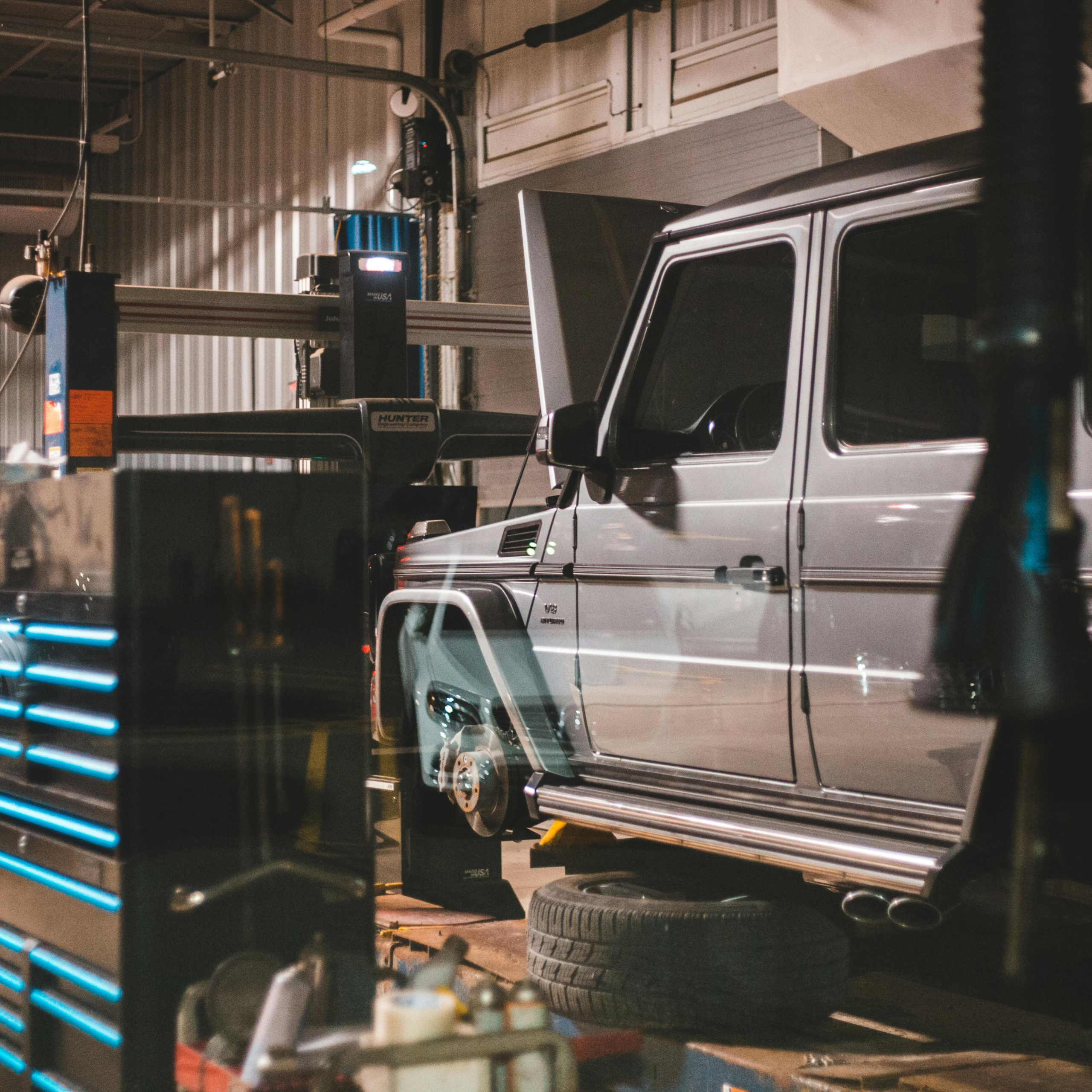
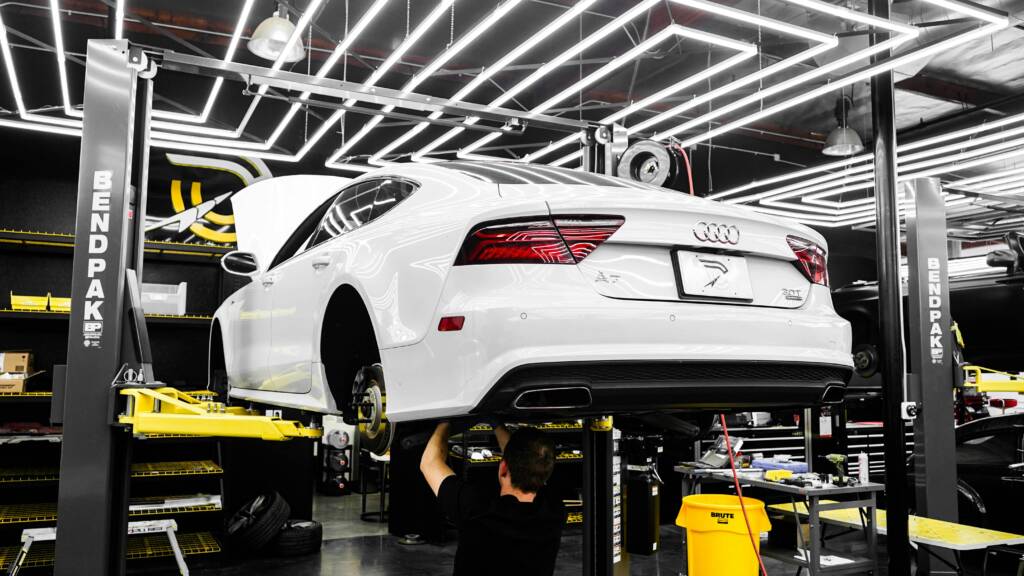
repair begins with understanding how impact energy has travelled through the vehicle, not just what is visible on the surface. Every dent or deformation is assessed to determine its effect on panel structure, mounting points, and alignment.
Rather than forcing panels back into shape, correction is carried out gradually and precisely. This approach preserves the strength and integrity of the metal while restoring the vehicle’s original form.
Once structural alignment is corrected, the surface is examined closely for previous repairs, material thickness, and existing paint condition. Luxury vehicles often feature layered paint systems that require careful handling before refinishing begins.
Paint restoration focuses on accuracy rather than enhancement. Color matching is performed with attention to tone, depth, and reflection so the repaired area blends naturally with the surrounding finish.
The objective is not to highlight repair work — but to ensure it is visually undetectable once completed.
Controlled preparation and application
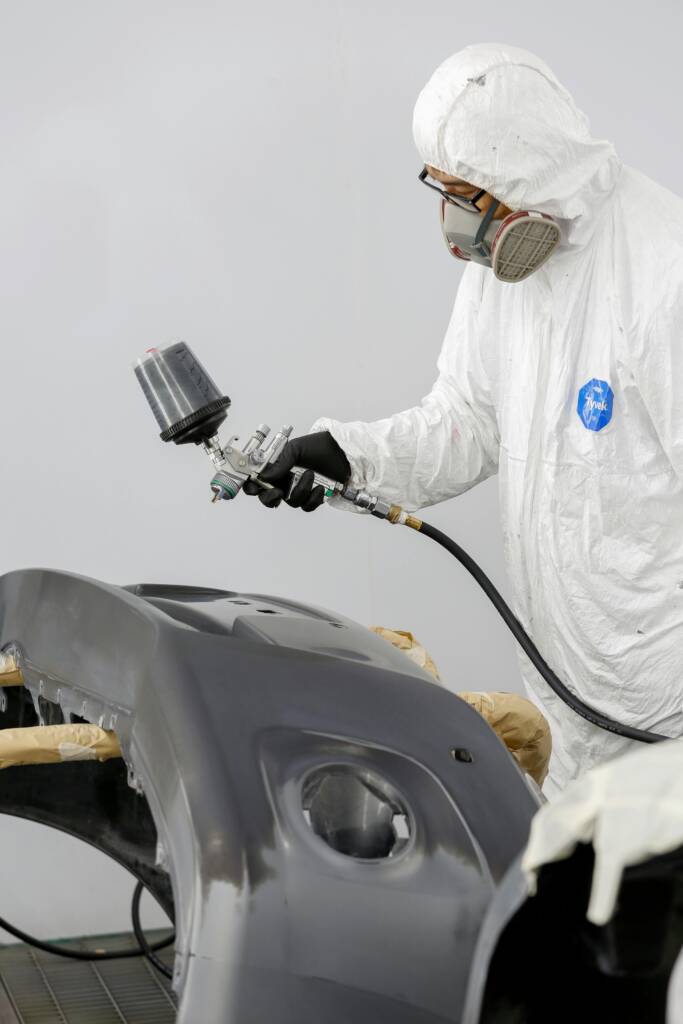
Each stage of preparation, paint application, and curing is completed in a controlled environment. This minimizes contamination and ensures consistency across all repaired panels.
Surface refinement is carried out carefully to maintain uniform texture and reflection. The goal is a finish that matches the original factory appearance, not an overworked or artificial result.
After paint work is completed, the vehicle is inspected for panel gaps, surface alignment, and overall visual balance. Reflections, edges, and transitions are reviewed from multiple angles.
The vehicle then undergoes a final detailing and visual review to ensure the repaired area integrates seamlessly with the rest of the bodywork. The repair should feel complete — not isolated.
Only after structural accuracy, paint consistency, and finish quality are verified is the vehicle prepared for delivery. The result reflects proper workmanship, careful execution, and respect for the vehicle’s original design.